
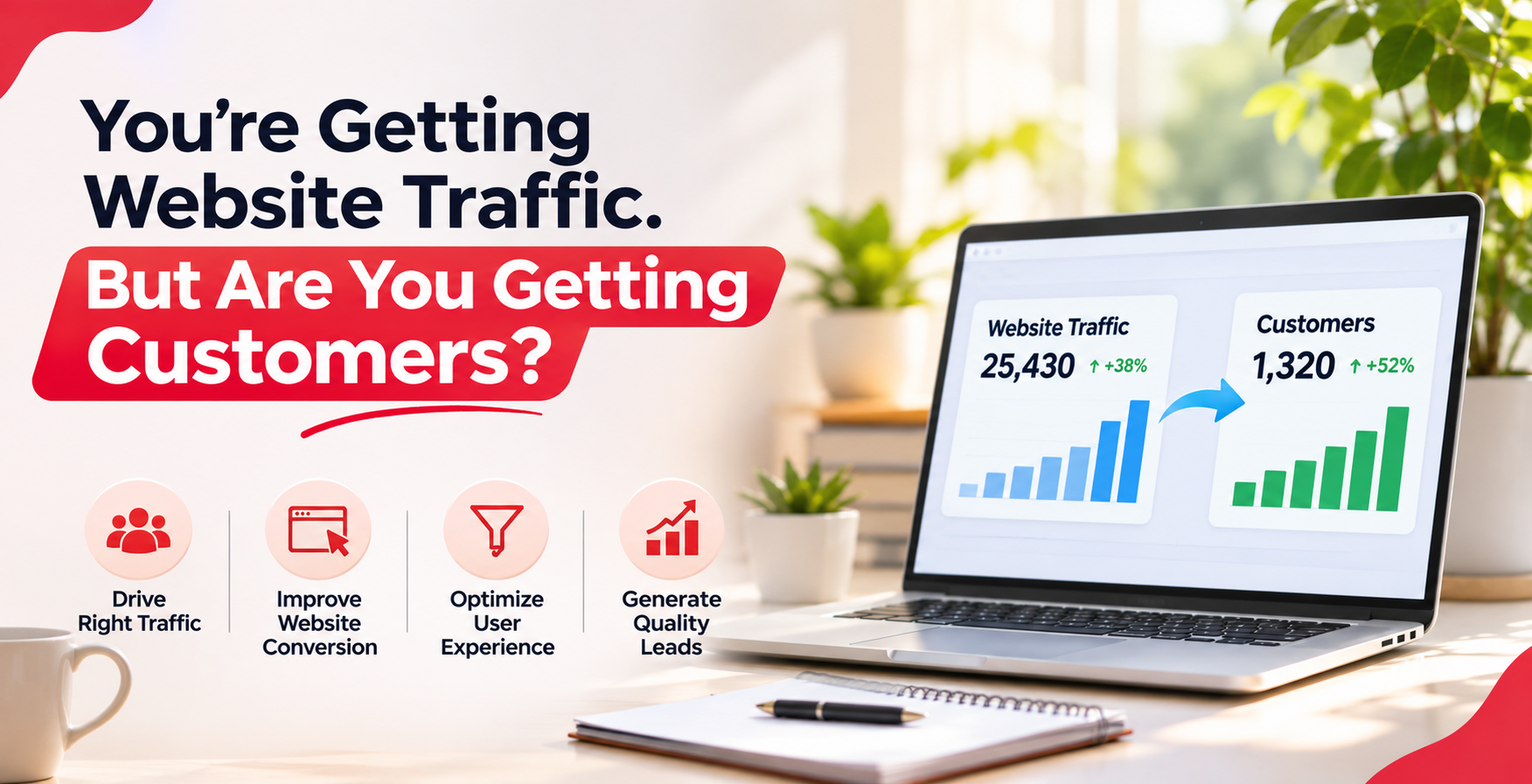
Getting visitors to your website is a good sign. It means people are discovering your brand, exploring your offerings and showing interest in what you have to offer. But there is one important question every business needs to ask: Are these visitors actually becoming customers? For many businesses, increasing Website Traffic is the primary focus of their digital marketing efforts. They invest in SEO, paid advertising, social media campaigns and content marketing to bring more people to their websites. However, higher traffic does not always translate into higher sales or quality leads. A website can attract thousands of visitors every month and still struggle to generate enquiries, bookings or purchases. The reason is often simple: attracting visitors is only one part of the journey. Converting them into customers is what drives business growth. This is where website conversion, user experience and a well-planned digital strategy make all the difference.
Imagine your website receives 10,000 visitors every month, but only a handful of them contact your business or make a purchase. The problem may not be your traffic numbers. It could be what happens after visitors land on your website. Here are some common reasons why website visitors leave without taking action:
1. Unclear Messaging
When visitors land on your website, they should immediately understand what your business offers and how it can help them. If your messaging is confusing, too generic or filled with unnecessary information, visitors may lose interest.
2. Poor Website Experience
A slow-loading website, complicated navigation or a layout that does not work well on mobile devices can affect the visitor experience. Even interested users may leave if finding information becomes difficult.
3. No Clear Call-to-Action
Your website should guide visitors towards the next step. Whether it is making an enquiry, booking a consultation or purchasing a product, every important page should have a clear call-to-action (CTA).
4. Lack of Trust and Credibility
People are more likely to engage with a business they trust. Missing testimonials, customer reviews, case studies or relevant business information can make potential customers hesitate before taking action.
Website traffic tells you how many people visit your website, while website conversion tells you how many of those visitors complete a desired action. These actions may include:
• Filling out a contact form.
• Making an online purchase.
• Booking a consultation.
• Signing up for a newsletter.
• Requesting a product demonstration.
• Calling your business.
For example, if 5,000 people visit your website in a month and 100 complete a desired action, your conversion rate is 2%. This is why businesses should look beyond visitor numbers and focus on the quality of traffic and the actions users take after arriving on their website. The ultimate goal is not simply to bring more people to your website but to attract the right audience and give them a reason to engage with your brand.
Getting visitors to your website is just the beginning. Here are five practical ways to improve your website's ability to convert visitors into customers.
1. Make Your Website Experience Simple and User-Friendly
Your website should make it easy for visitors to find what they are looking for. A clean layout, easy navigation, readable content and mobile-friendly design can make a significant difference. Avoid overwhelming visitors with too much information or unnecessary design elements. Instead, organise your content in a way that naturally guides users from discovering your brand to taking action. A better user experience can help reduce friction and encourage visitors to spend more time exploring your offerings.
2. Create Strong and Relevant Calls-to-Action
A visitor may be interested in your product or service but still leave without converting if they do not know what to do next. This is where effective CTAs come in. Use clear and action-oriented phrases such as:
• Get a Free Consultation
• Explore Our Services
• Request a Quote
• Book a Demo
• Get Started Today
Place these CTAs strategically across important website pages. Make sure they are easy to notice and relevant to the content surrounding them. A well-placed CTA gives visitors a clear next step instead of leaving them to figure it out themselves.
3. Focus on High-Quality and Relevant Content
Content plays an important role in influencing purchasing decisions. Your website should answer the questions potential customers are already asking. Create useful service pages, informative blogs, FAQs and product descriptions that address customer needs and concerns.
Rather than focusing only on promoting your business, explain how your offerings solve real problems. When your content provides value, it helps build credibility, keeps visitors engaged and supports better lead generation.
4. Build Trust Through Social Proof
Before making a decision, people often look for reassurance that they are choosing the right business. Adding customer testimonials, reviews, client feedback, case studies and relevant industry credentials can help establish trust.
Make sure these elements are visible on important pages, particularly where visitors are expected to make a purchase or submit an enquiry. A website that communicates credibility gives potential customers more confidence to take the next step.
5. Improve Your Conversion Rate Through Continuous Testing
Website optimisation is not a one-time activity. Customer behaviour changes, design trends evolve and what works for one audience may not work for another. This is why businesses should regularly review website performance and identify areas that need improvement.
Try testing different headlines, CTA placements, page layouts, forms and landing page designs. Even small changes can influence how visitors interact with your website. This process is known as Conversion Rate Optimization (CRO). It focuses on improving the percentage of visitors who complete a desired action without necessarily increasing the overall traffic.
Getting the right audience to your website is just as important as improving its conversion rate. A strong digital marketing strategy brings together different channels to attract people who are genuinely interested in your products or services. Here is how different digital marketing activities contribute:
Search Engine Optimization: Helps your website appear in relevant search results and attract people actively looking for your products or services.
Paid Advertising: Reaches targeted audiences through platforms such as Google Ads and social media advertising, helping generate relevant website visits and enquiries.
Content Marketing: Educates potential customers through blogs, guides and informative website content, helping them make informed decisions.
Social Media Marketing: Builds brand awareness, engages audiences and directs interested users to relevant website pages.
Email Marketing: Helps nurture potential customers by sharing relevant updates, offers and information that encourage them to take action.
When these activities work together, they create a more connected customer journey. Instead of focusing only on website visits, businesses can build a strategy that attracts, engages and converts potential customers.
If you want to understand whether your website is actually contributing to business growth, tracking the right metrics is essential. Here are some important website performance indicators to monitor:
• Conversion Rate: The percentage of website visitors who complete a desired action.
• Bounce Rate: The percentage of sessions that end without further engagement, depending on the analytics measurement used.
• Average Engagement Time: The average time visitors actively engage with your website.
• Traffic Sources: Shows where your website visitors are coming from, such as organic search, paid campaigns, social media or direct visits.
• Lead Generation: Measures how effectively your website attracts potential customers through enquiries, registrations and form submissions.
• Cost Per Lead: Helps determine how much you are spending to generate each lead through your marketing campaigns.
Tools such as Google Analytics 4 and Google Search Console can help businesses understand website performance, user behaviour and opportunities for improvement. Monitoring these metrics regularly allows you to make informed decisions instead of relying on traffic numbers alone.
A successful website is not just about attracting visitors. It is about creating an experience that helps people understand your brand, trust your offerings and take meaningful action. Your Website Traffic strategy and conversion strategy should work together. While digital marketing helps bring potential customers to your website, a well-optimised website gives them a reason to stay, engage and convert. At Substance Digital, we believe effective digital marketing goes beyond visibility. It is about building meaningful connections between brands and their audiences through the right strategy, creative communication and performance-focused execution. Because at the end of the day, website traffic is a metric. Turning that traffic into customers is progress.
Let's Connect
Don't wait until tomorrow. Talk to one of our consultants today and learn how to start leveraging your business.